Simpro has a new AI, and it's aimed at the customers you did a job for two years ago and haven't heard from since. On 19 November 2026 Simpro launched Delight by Simpro, an AI for following up past customers, alongside EngineRoom, a partner company that turns finished jobs into marketing. (Simpro Group and EngineRoom, Your Next Job Is Hiding in Your Last One: Automated Growth with Delight by Simpro & EngineRoom (live webinar, 19 November 2026), read 19 November 2026)
The idea is a good one: the customers you already have are the cheapest work you'll ever win. Here is what Simpro showed, in its own words, and then how EasyDone already handles the same jobs.
What is Simpro Delight?
Simpro called Delight a "digital worker" for follow-up. (Simpro Group and EngineRoom, Your Next Job Is Hiding in Your Last One: Automated Growth with Delight by Simpro & EngineRoom (live webinar, 19 November 2026)) On the webinar it described four jobs:
- Writing to past customers about their own job history, equipment and service records. (Simpro Group and EngineRoom, Your Next Job Is Hiding in Your Last One: Automated Growth with Delight by Simpro & EngineRoom (live webinar, 19 November 2026))
- Finding work that's due with a "Service Opportunity Finder": ageing equipment, overdue compliance checks and services a customer may not know you offer. (Simpro Group and EngineRoom, Your Next Job Is Hiding in Your Last One: Automated Growth with Delight by Simpro & EngineRoom (live webinar, 19 November 2026))
- Chasing quotes that went quiet, checking in after a job and reaching customers before the busy season. (Simpro Group and EngineRoom, Your Next Job Is Hiding in Your Last One: Automated Growth with Delight by Simpro & EngineRoom (live webinar, 19 November 2026))
- A dashboard of who came back, when, for what and what it was worth. (Simpro Group and EngineRoom, Your Next Job Is Hiding in Your Last One: Automated Growth with Delight by Simpro & EngineRoom (live webinar, 19 November 2026))
Delight was described as "natively connected to Simpro" and was shown on slides rather than in a live account. Simpro didn't give a list price for it. (Simpro Group and EngineRoom, Your Next Job Is Hiding in Your Last One: Automated Growth with Delight by Simpro & EngineRoom (live webinar, 19 November 2026))
What is EngineRoom?
EngineRoom is a separate company that has been a Simpro partner for just over three years. (Simpro Group and EngineRoom, Your Next Job Is Hiding in Your Last One: Automated Growth with Delight by Simpro & EngineRoom (live webinar, 19 November 2026)) It pulls notes and photos from finished jobs and turns the best ones into a Google Business Profile post, a page on your website and a case study to show when quoting. Its own advice is worth keeping whatever software you use: publish your best jobs, not hundreds of thin pages, and check facts, consent and privacy first. (Simpro Group and EngineRoom, Your Next Job Is Hiding in Your Last One: Automated Growth with Delight by Simpro & EngineRoom (live webinar, 19 November 2026))
The same jobs, already done in EasyDone Work
Delight sits on top of Simpro. In EasyDone Work, following up is part of the same app as the enquiry, the quote, the job and the invoice, so there's nothing extra to connect.2 Our Simpro Delight comparison sets the two out row by row.
Quotes that go quiet. A ready-made automation follows up quotes that haven't had an answer. Other ready-made ones ask for a review once the job is paid, chase unpaid deposits and remind the customer the day before a visit. Switch one on as it is, or describe the follow-up you want in plain words and set the steps in a visual builder.2
Past customers and work that's due. Service agreements carry the visits planned through the year. An "every past customer" list shows why each person is on it, such as their last service call or project, and lets you email or text them.
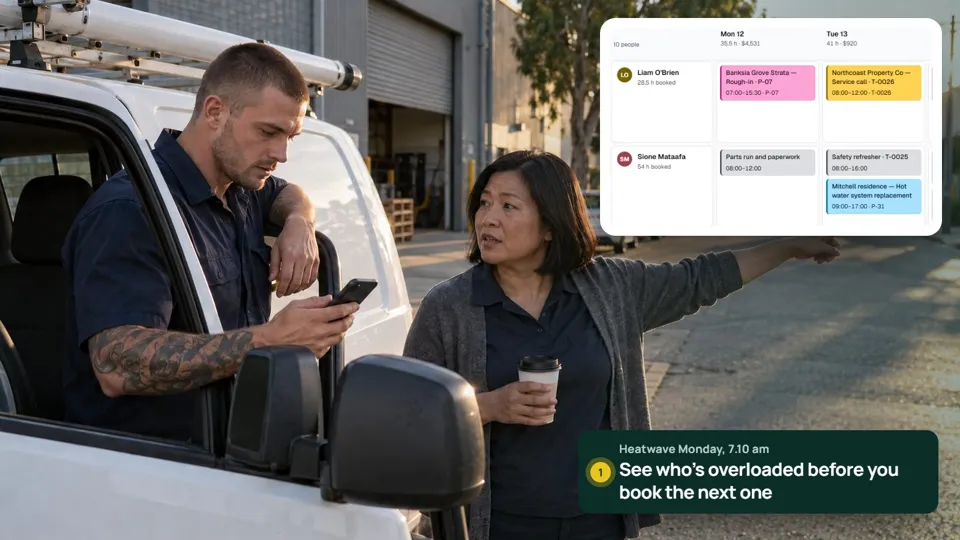
Seeing what came back. Each automation shows its runs, the messages sent, the clicks and the money recovered. Campaigns show which flyer, ad, van sign or Google listing actually won the work, right through to the paid invoice.
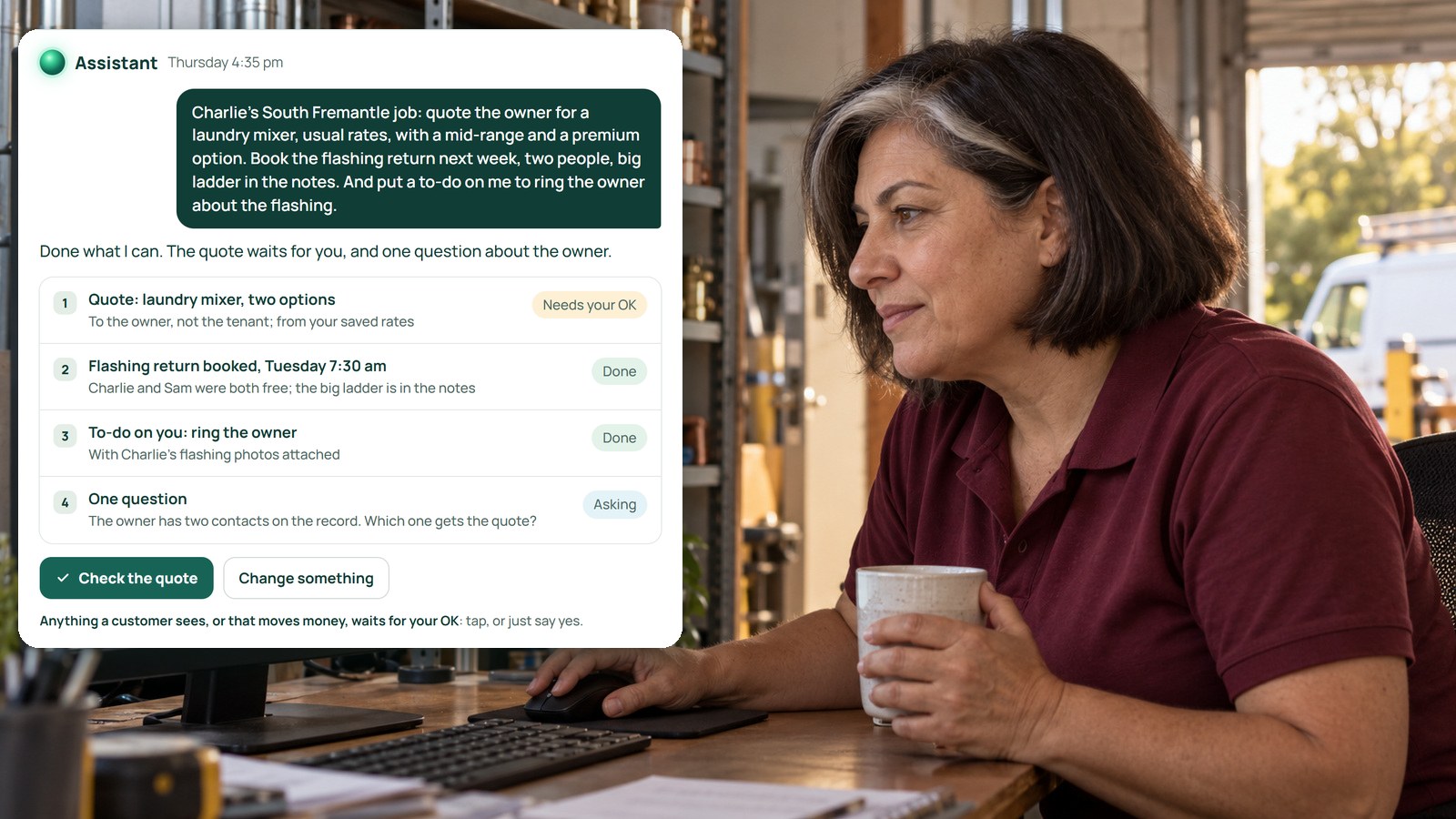
Nothing goes out that shouldn't. A run can be held for your review before anything is sent, and customers who've asked not to hear from you are skipped. The Assistant can be set to check with you before it sends or changes anything.
One record per customer. Messages, service work, quotes, invoices and projects sit on the customer's own record, with notes about them the whole team can read.
Where EasyDone goes further than follow-up
Follow-up is one job. The point of EasyDone is to run the whole business from one place, with AI doing most of the running:
- The Assistant works inside Work, in the app and by text, and you can talk to it out loud.
- An AI front desk answers your business number by call and text, so a missed call becomes a booked job instead of a lost one.
- Software that changes for you. When you need it to work differently, you ask from inside the app, and the team reviews the change with you.
- Prices on the website. Both EasyDone Work and EasyDone Studio publish their prices, so you can weigh them before you talk to anyone.
Turning finished jobs into getting found: EasyDone Studio
EngineRoom's half of the webinar was about being found for the work you do. That's what EasyDone Studio is for, from the same company as Work.3 Our comparison with Delight and EngineRoom sets the two out side by side.
- Your website, checked every week and again shortly after you publish a change. Studio fixes page titles, descriptions and image text, and tells you what it did. Let it run, or check each change first.3
- Search and AI search. Studio tracks where you rank, checks what AI assistants say about your business and shows what to fix next.3
- Articles for your OK. Studio writes articles about the work you do, and you approve them before they go up.
- A Monday report of your week, in plain words: what went out, how you're tracking and what Studio did.
- Change any page and see it first. Edits stay as drafts until you publish them.
What to do this week
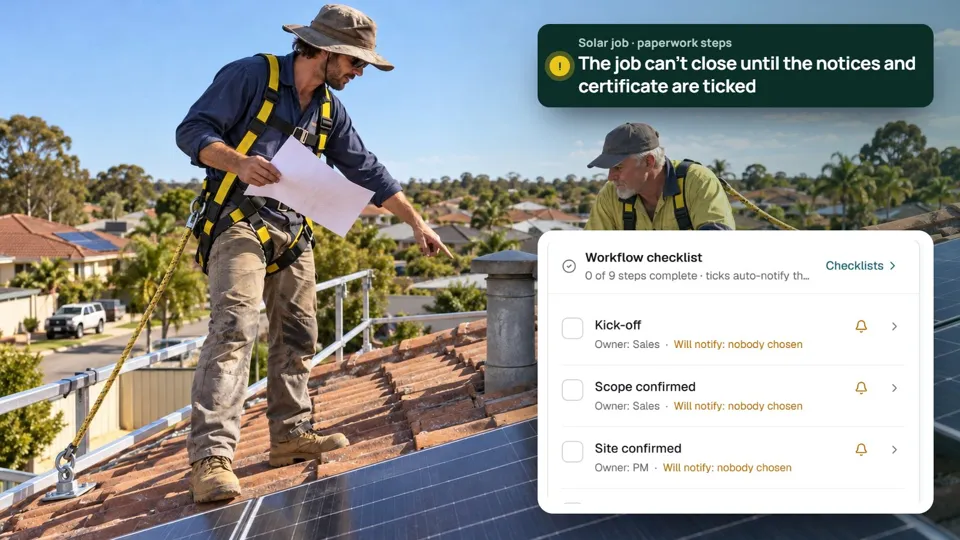
- Write better job notes. Four lines at the end of every job: the problem, what was found, what was done and how it was left, plus two photos. Every follow-up and every case study, in any software, starts there.
- Chase your open quotes. Any quote older than a fortnight with no answer deserves a short, personal note.
- Ask three questions before any AI writes to your customers. Does it send by email or text? Do I approve each message? How does a customer opt out?
- See it with your own work. Book a 30-minute demo of EasyDone Work and bring a real quote or job, or compare it with the job software Australian trades use. If you're on Simpro now, our Simpro alternative page sets out the differences from Simpro's own website.
- Get your website working too. See EasyDone Studio's plans and pick the one that fits: Studio does the weekly website and search work for you.