Written by the EasyDone team. Last checked 10 October 2026.
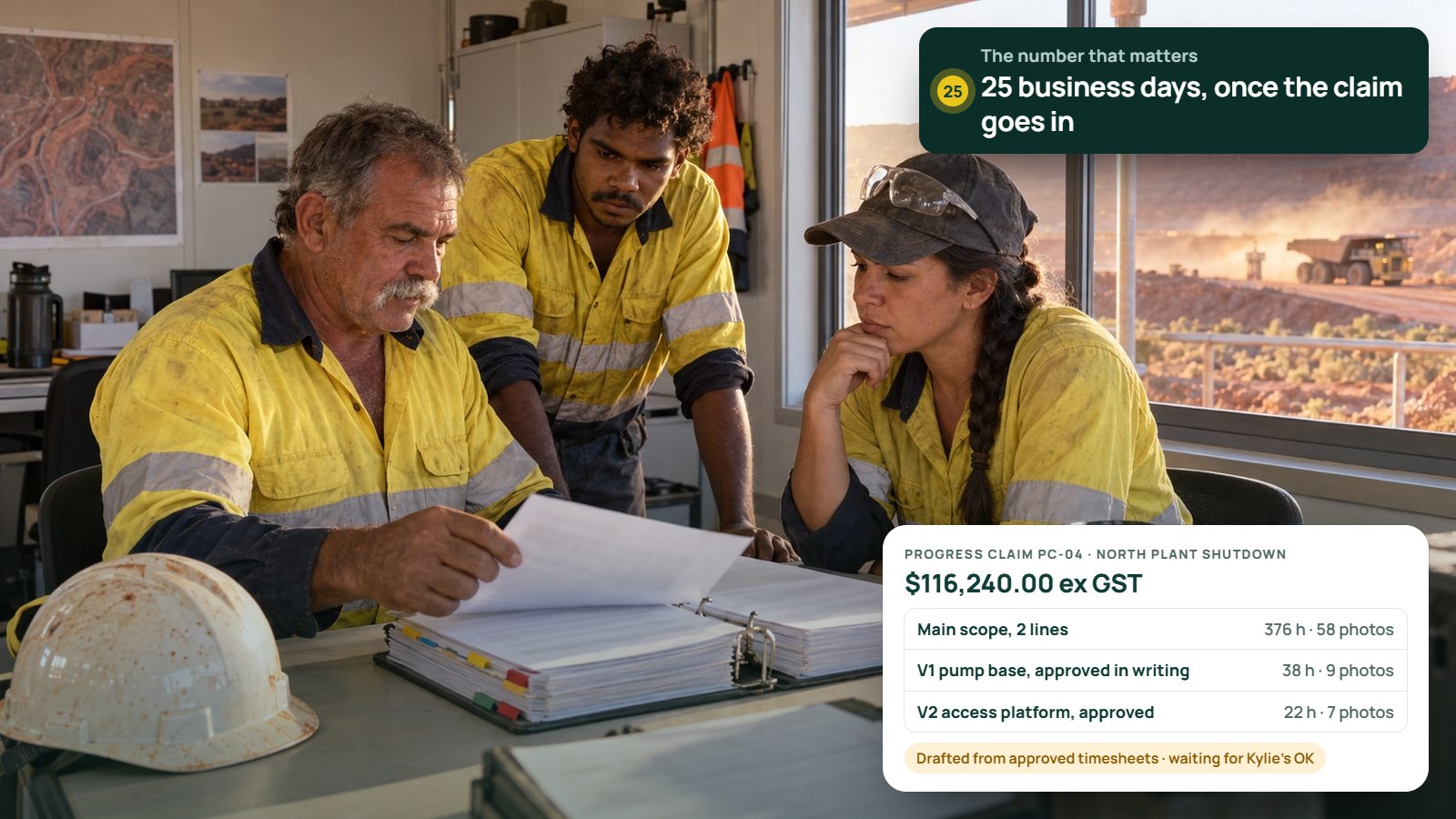
25 business days. Under WA's Security of Payment Act, that's when a progress payment to a subcontractor falls due after the claim goes in, unless the contract sets an earlier date.1 Miss the claim, send it wrong, or lose the paperwork behind it, and the clock never starts.
That one number tells you what software a WA mining contractor actually needs. Not a prettier diary. A system that gets the right people on site with the right paperwork, records exactly what they did, and turns it into a claim that stands up.
Here are the numbers that matter, and what to do about each one. We'll use a made-up Kalgoorlie outfit to keep it real: Hannan Street Mechanical, owner Kylie Vukasin, 22 fitters and boilermakers, shutdown and maintenance work across three mine sites within a couple of hours of Boulder.
The numbers at a glance
| Number | What it is | Why your software cares |
|---|---|---|
| 20 business days | Default due date for a progress payment from a principal to a head contractor1 | Your claim has to go in on time and complete |
| 25 business days | Default due date for a progress payment to a subcontractor1 | Most mining contractors live here |
| 15 business days | The latest a respondent can give a payment schedule disputing your claim, unless the contract says sooner1 | You need the evidence ready the moment they push back |
| 1 August 2022 | The date the Act started applying to new contracts2 | Older contracts may still sit under the old rules |
| 2 | Systems in play on every job: the mine's and yours | Know which one holds which approval |
| 0 | Days you can start before the induction | Readiness has to be visible before the roster says go |
Whether a particular scope is covered by the Act depends on the work itself; it still carves out some resource-extraction work, so check where your scope sits.1
Number 1: get paid inside 25 days
A mining contractor's cash problem is rarely the work. It's the gap between the work and the money. Shutdown finishes Sunday night, the crew's flown home, and somebody in the office has to piece together who did what, against which purchase order, with which variation, before a claim can go in.
What has to be true for a claim to stand up:
- Every hour is against the right scope. The client's original PO and each approved variation are separate. Hours for the extra pump base can't bleed into the main job.
- The variation is approved before it's claimed. A supervisor saying "yeah, do it" on the radio is a conversation. Get the approval in writing and attached.
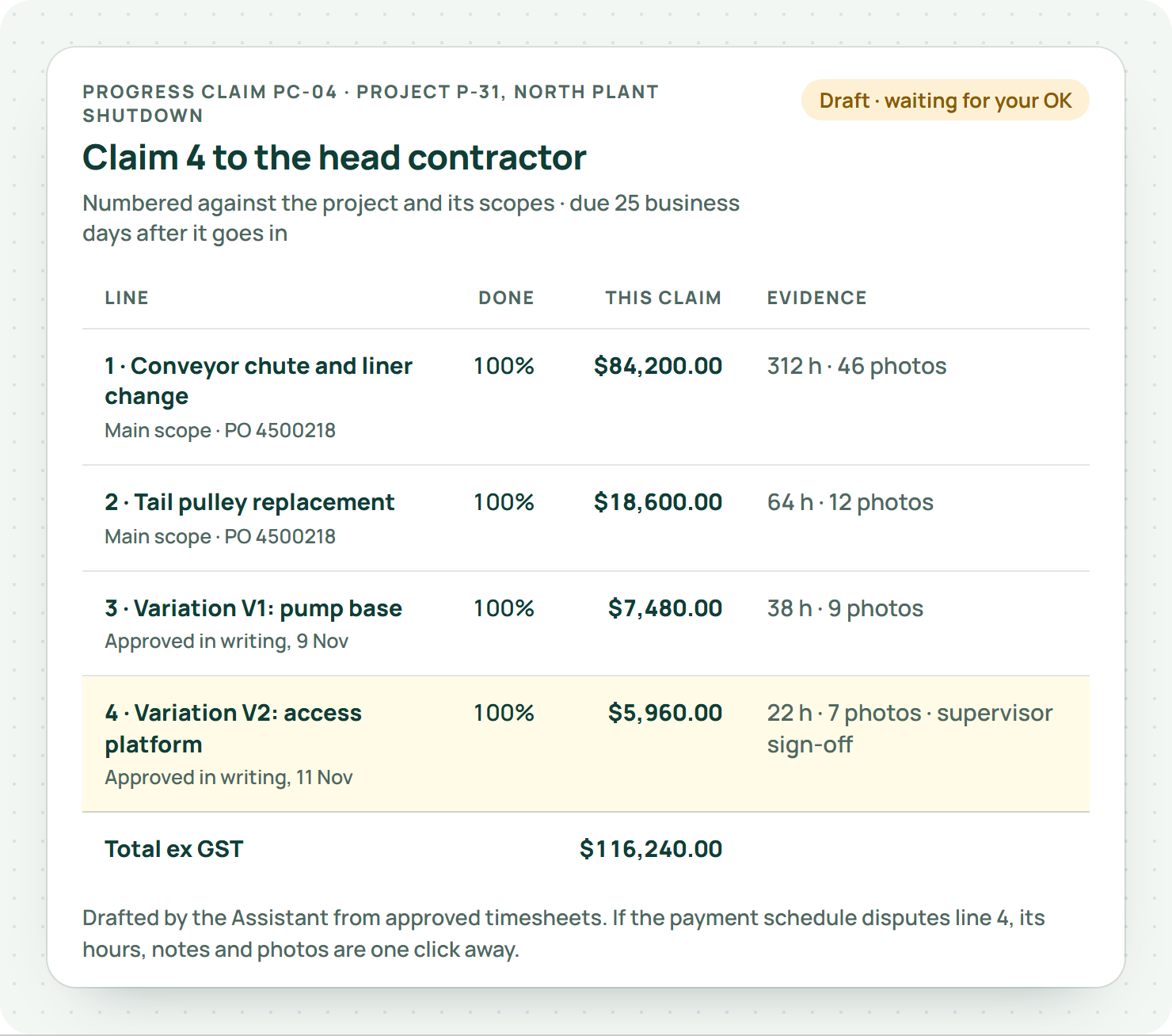
- The claim is numbered and matches the scope. So when the payment schedule comes back disputing line 4, you can find line 4's evidence in two minutes, not two days.
The Small Business Development Corporation's plain summary of the Act is worth ten minutes of every owner's time.2
Number 2: two systems, one source of truth for each thing
WorkSafe WA's contractor guide is blunt: mine operators and contractors share health and safety duties and can't contract out of them.3 The mine operator runs its own safety management system.4 Your software doesn't replace any of that.
So draw the line on day one. The mine's portal is the boss of site access, permits and its own approvals. Your system is the boss of your scope, your people's readiness, your hours, your gear and your claims. When both systems try to hold the same approval, somebody ends up working off the wrong one.
Number 3: one induction, before anyone starts
WorkSafe's guidance says workers should get the right safety information before they start, and the business has to make sure they actually understand it.5 A PDF in someone's inbox isn't an induction.
And the tickets need to be real. WorkSafe has warned the WA mining industry about fraudulent qualifications and urged careful checking of qualifications and supporting documents.6 A clean scan isn't a verified ticket. Record who checked it, when, and what they checked it against, and keep it out of the general job attachments, because it's personal information.
The practical test: can the office see, at a glance, that a fitter is rostered for Monday but his site induction isn't done? If not, he finds out at the gate. Our FIFO roster guide goes deeper on available versus ready.
Number 4: one current version of the work pack
Scope changes mid-shutdown. The office has version 3, the crew downloaded version 2 on Thursday, the client approved half of the variation. That's how the wrong pump base gets poured.
Mark the approved version, mark the old one superseded, and make sure the supervisor confirms the current pack before work carries on. For construction activities on a mine site, WorkSafe explains when high-risk construction work needs a safe work method statement.7 That's written and reviewed by your competent people through your safety process, not a renamed job checklist.
Number 5: zero incidents waiting in a job queue
WorkSafe sets out extra reportable-incident requirements for mines.8 A potential notifiable event goes through the official process and your site's arrangements immediately. It never sits in an ordinary job list waiting for Monday.
How Kylie runs it in EasyDone
Yeah, we make EasyDone, so we're biased. Here's why we reckon it fits a contractor like Hannan Street better than a diary, a spreadsheet and a shared drive.
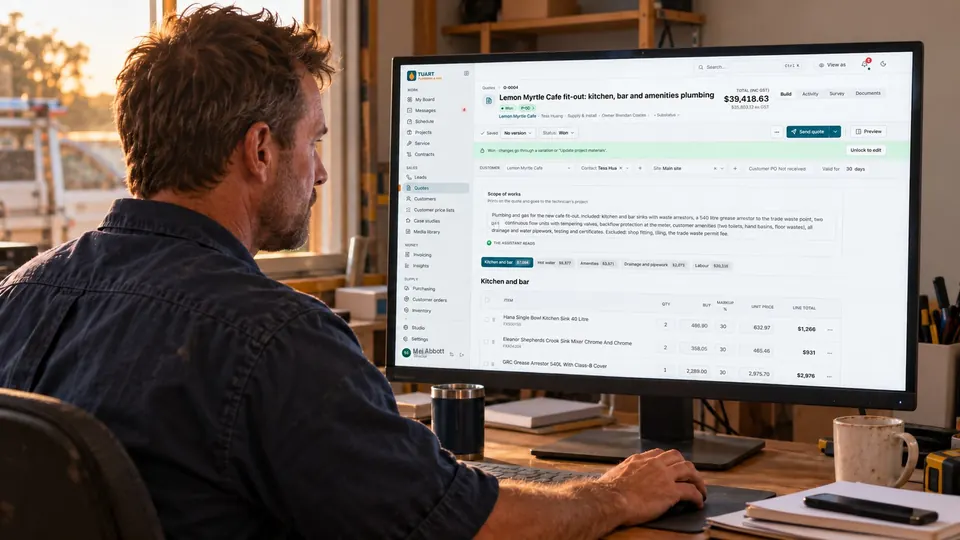
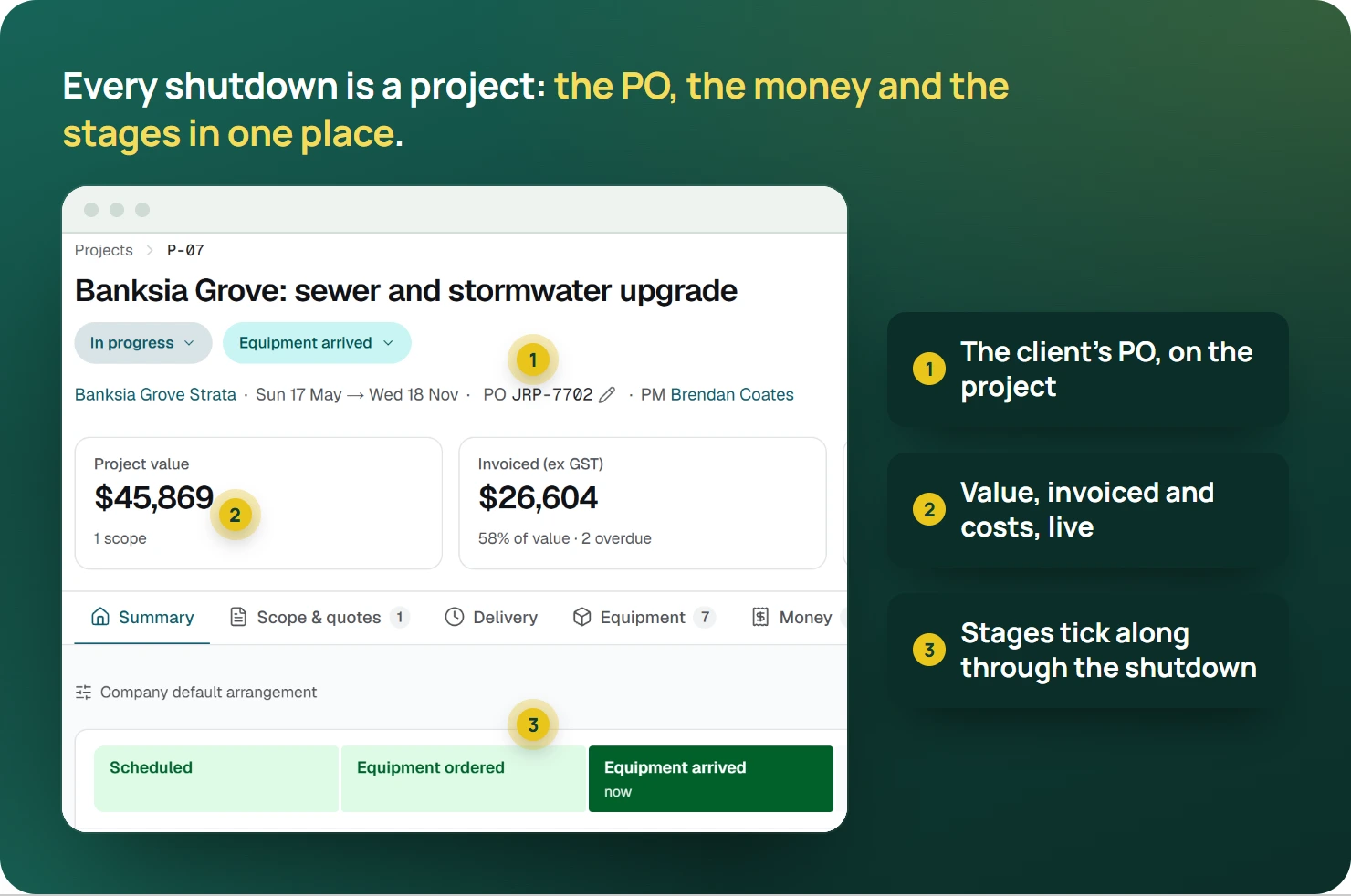
Every shutdown is a project. The client's original PO comes in as a quote that becomes the project's first scope. Each approved variation is its own scope with its own lines and labour budget, sitting on the Gantt. Kylie sees hours burned against the budget, scope by scope, while the shutdown's still running.9
Claims go out numbered against the project. Progress claims are numbered against the project and its scopes, so when a payment schedule disputes line 4, the hours, notes and photos behind line 4 are one click away.9
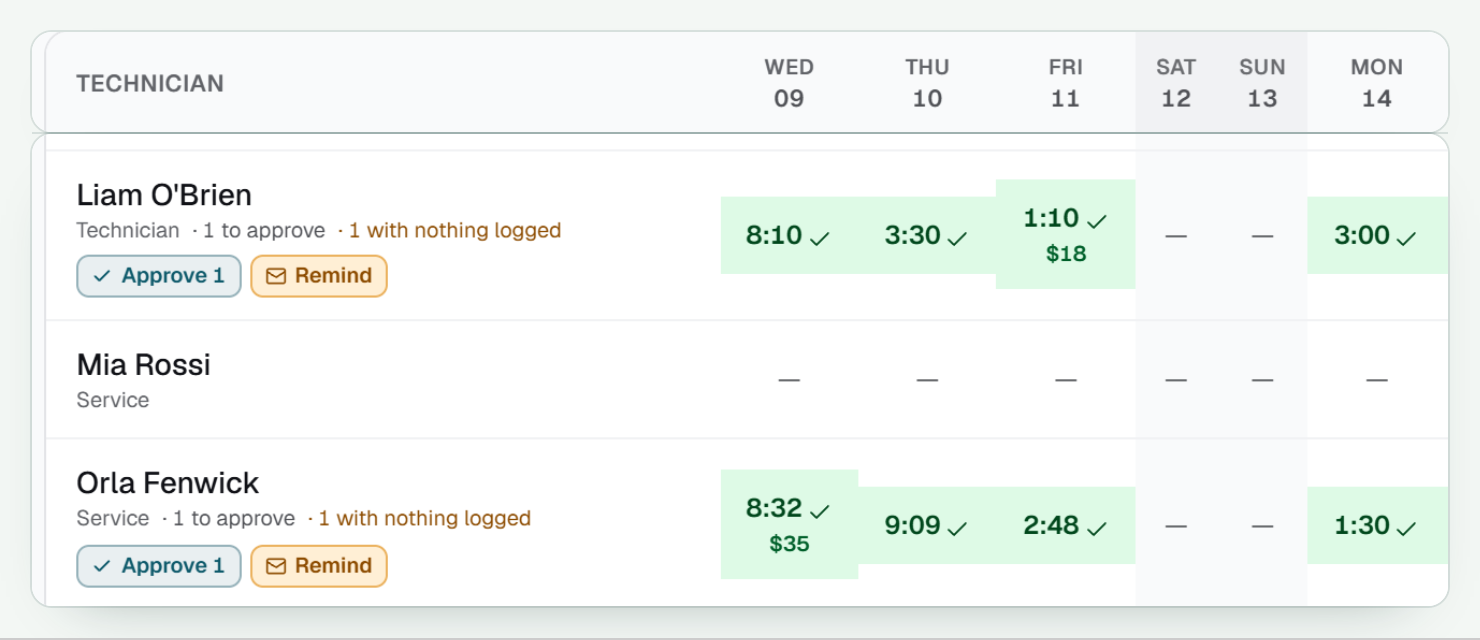
Hours go on the job, on site. The crew record time against the job and scope from their phones, with notes and photos while it's fresh. Timesheets then get reviewed and approved in the office before anyone's paid or anything's claimed.9
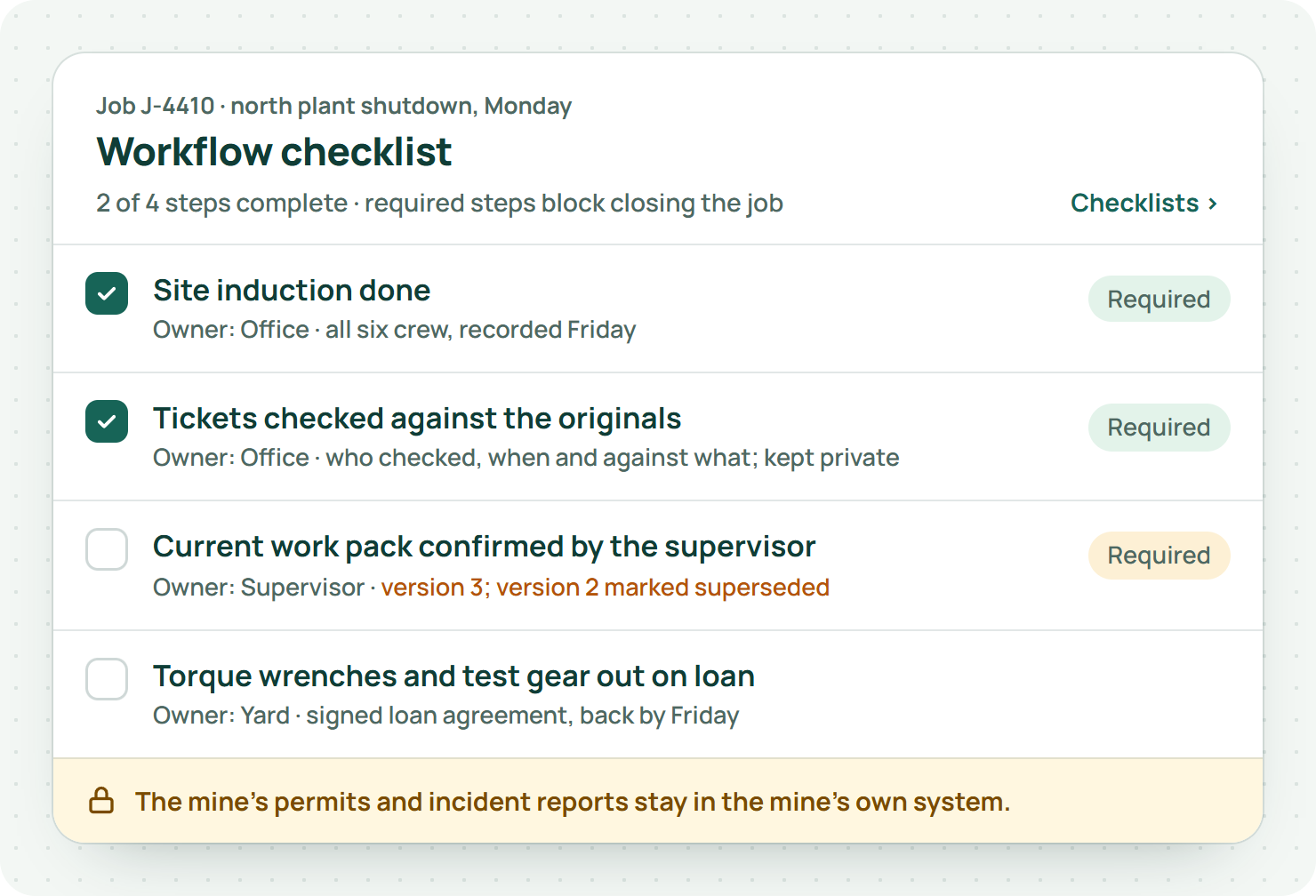
Readiness is a required step. Kylie's mine jobs carry required checklist steps: induction done, tickets checked, current pack confirmed by the supervisor. The job can't be closed off until they're filled in.9 The torque wrenches and test gear sent out to site are recorded as on loan, with a signed loan agreement, so they come back.9
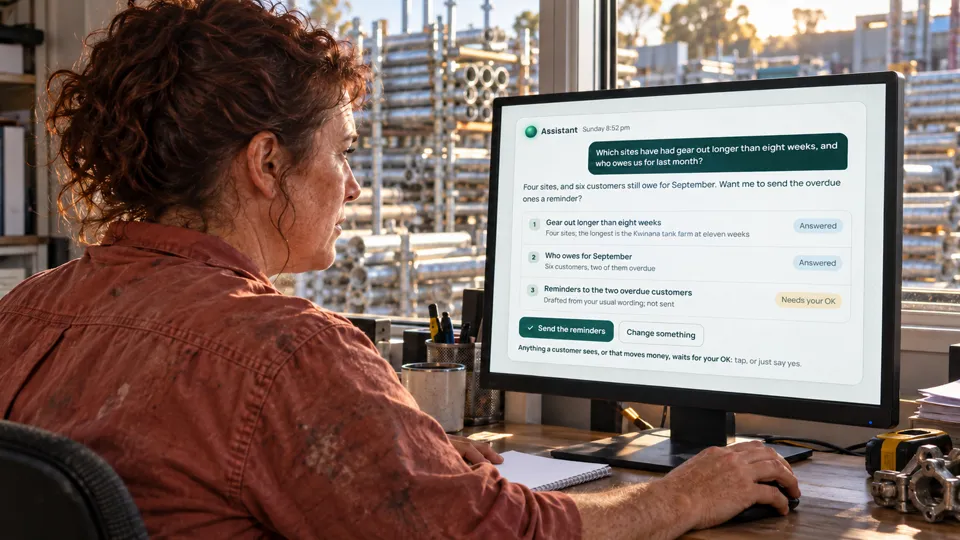
The admin gets done by asking. On Monday morning, back in the office on Hannan Street, Kylie asks the Assistant: "Draft the progress claim for the north plant shutdown: main scope and the pump base variation, from approved timesheets." It finds the project, pulls the approved hours and the scopes, and shows her the claim before anything goes. Money and anything sent to a client wait for her OK.10 Then overdue reminders go out by themselves if day 25 comes and goes.9
And when the mine wants it their way, Workshop changes EasyDone for her business: planned, built and tested, then it's hers.11
Our one honest limit: EasyDone isn't the mine's safety management system or its permit portal, and it doesn't lodge anything with WorkSafe. It's the contractor's side of the job, done properly.
What do mining contractors ask?
Is one standard work pack enough for every site?
Use one structure so your people know where everything is, then add each site's own requirements on top. Mine A's permit process isn't Mine B's, and the client's portal decides what they need.
Does a signed checklist prove the work was done safely?
It records that someone confirmed a step. That's useful evidence, but what it's worth depends on the work, the people and the safety process behind it. It doesn't replace the competent person or the mine's own system.
Should every attachment go to the client?
No. Agree the handover pack with the client: what they need to accept the work and pay the claim. Internal notes, personal records and ticket scans stay internal, with access limited to the people who need them.
What's the quickest win for cash flow?
Claim on time, every time, with the evidence behind every line ready before you send it. Most disputed claims aren't disputed because the work wasn't done. They're disputed because nobody could show it quickly.
So what's the number that matters most?
For Hannan Street, it's the 25. Before, claims went out a week late because nobody could stitch the hours together, and Kylie spent every month-end chasing money she'd already earned. Now the claim is drafted Monday, checked by lunch and sent by two.
Pull your last three progress claims. How long after the work did each one go out? How many lines got disputed, and how long did it take to find the evidence? That's your number.
Then have a look at EasyDone's modules and bring a real shutdown to a demo. We'll run it from the PO to the claim, variations and all.