
Written by Colin Tross, founder of EasyDone and an audio visual installation business owner. Last checked 10 October 2026.
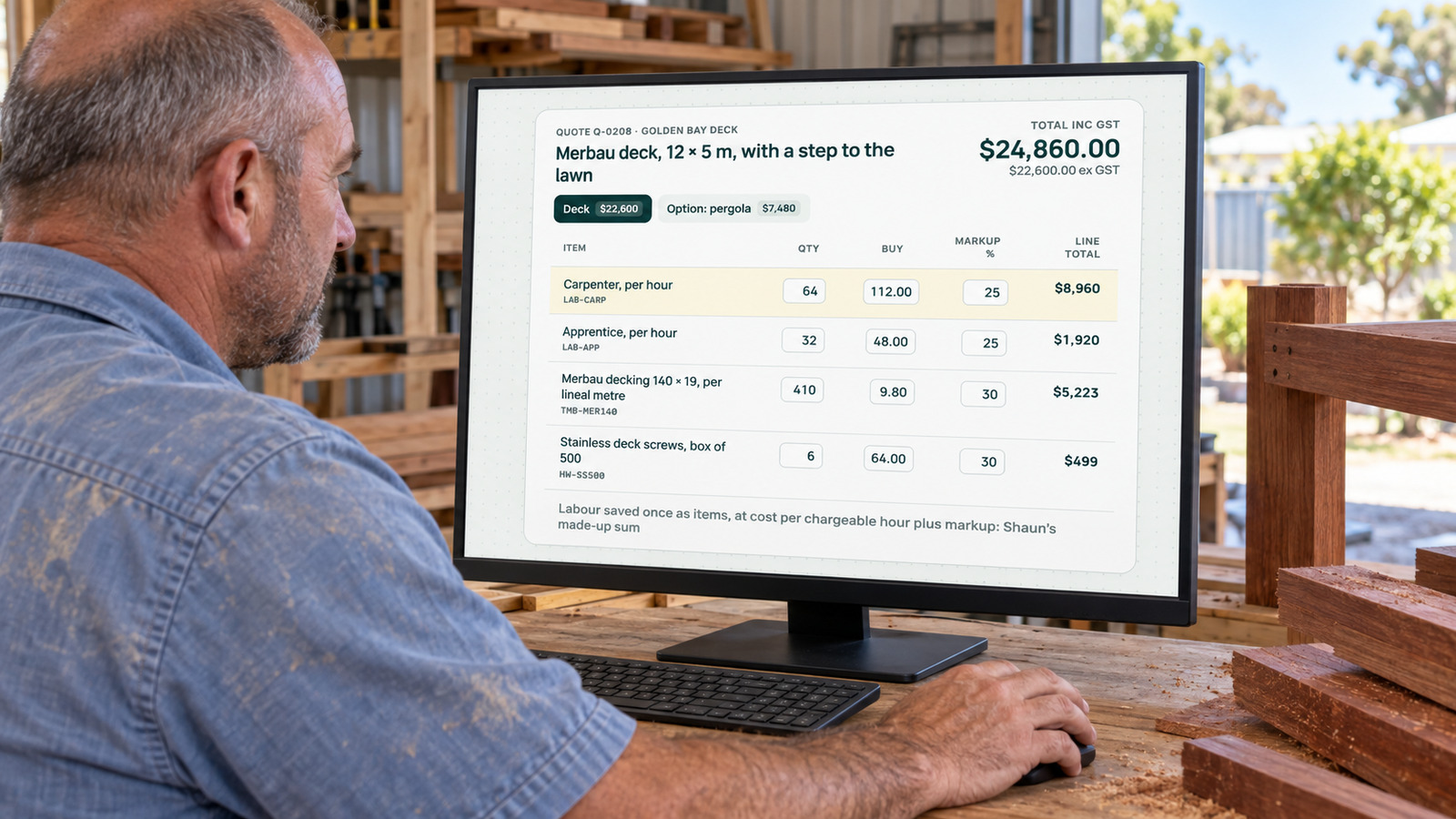
It's 9.40 on a Sunday night in Warnbro and Shaun Tregear is quoting a merbau deck for a couple in Golden Bay. Twelve metres by five, a step down to the lawn, a pergola they're "still thinking about". He types his hourly rate into the labour line the same way he has for six years, without thinking.
That rate is the number his old boss charged in the year Shaun went out on his own. Since then he's put on three carpenters and an apprentice, bought a second ute, rented a shed in Rockingham and started paying an accountant who, last month, asked him a question he couldn't answer.
"Shaun, you're busier than you've ever been. Why are you making less?"
What's really going on?
Tregear Decks & Pergolas has more work than it can handle. The diary's full until Christmas. The quotes are winning. And that's the problem: they're winning because they're too cheap, and every extra job digs the hole a little deeper.
Shaun's using one number to answer three different questions:
- The wage rate: what he pays the carpenter for an hour.
- The cost rate: what that hour actually costs the business, once you count everything that comes with the carpenter.
- The selling rate: what the customer pays for an hour of work, so the business covers its costs and makes a profit.
Most tradies who get this wrong aren't bad at maths. They just copied a number once and never pulled it apart. Here's how to pull it apart, in an evening, with a cuppa and last year's figures.
Step 1: what does an hour of your carpenter really cost?
Start with the employment side, and get it right before you go near a customer price. The wage on the payslip is only the beginning. Fair Work's guidance covers wages, penalty rates and allowances,1 and a carpenter's tool allowance or a leading hand's extra pay are part of the cost of having them.2
Don't guess the award rate, and don't use the national minimum wage as if it's a trade wage. Use the Fair Work Pay and Conditions Tool for the actual classification,3 or ask your bookkeeper. And keep this bit sacred: you're working out what someone costs, not deciding what they get paid. Those are separate questions, and the second one isn't up for negotiation in a spreadsheet.
Then add what comes with the person: super, workers comp, leave, public holidays, sick days, their ute, their fuel, their tools, their phone, their PPE. If it only exists because that person works for you, it goes in.
Step 2: what does it cost to keep the doors open?
Now the stuff that's there whether anyone swings a hammer or not. Business.gov.au lists labour, materials and overheads as the inputs to any price,4 and overheads are the ones that get forgotten:
- Insurance, licences and registrations.
- The shed, the power, the internet.
- The accountant, the bookkeeper, the software.
- Advertising, the website, the signwriting on the utes.
- Your own time doing admin. Every hour Shaun spends quoting at the kitchen bench is an hour nobody's paying for. Count it.
Split the total across your field staff fairly, and write down how you did it. A cell called "loaded rate" with a number in it and no explanation is how Shaun got here in the first place.
One rule: count each cost once. If materials are marked up separately on the quote, don't sneak the timber yard's delivery fees into the labour rate as well.
Step 3: how many hours can you actually charge?
This is the one that stings. Shaun pays his carpenters for every hour they're at work. He can only charge for the hours they're on a job, building something a customer is paying for.
Here's where the rest of the week goes:
- Driving. Warnbro to Golden Bay is fine. Warnbro to a Mount Hawthorn renovation at 6.30 am is not.
- The timber run, the hardware run and the "we're short two joist hangers" run.
- Perth winter. You can't lay a deck in a downpour.
- Callbacks: the board that cupped, the gate that sags, the bit you go back and fix for free.
- Training the apprentice, which is worth it, and still not chargeable.
- Leave, public holidays and sick days.
Use your own records, not a perfect calendar. If you don't know the number, look at the last month of timesheets beside the last month of invoices. That gap is your answer, and it's usually bigger than you'd like.
Step 4: run the sum, with margin and markup kept straight
Here's Shaun's sum, for one carpenter. Every number is made up to show the arithmetic. Use yours.
| Line | Made-up figure |
|---|---|
| Cost of employing the carpenter for a year: wages, super, leave, allowances, workers comp | $95,000 |
| His ute, fuel, tools and phone | $18,000 |
| His fair share of the overheads, including Shaun's admin time | $27,000 |
| Total cost of that carpenter for the year | $140,000 |
| Paid hours in the year, before leave | 1,976 |
| Chargeable hours, after leave, travel, timber runs, rain and callbacks | 1,250 |
| Cost per chargeable hour | $112 |
| Selling rate with a 25% markup on cost | $140 |
| Selling rate for a 25% margin on the price5 | about $149 |
Look at the last two lines. Markup is added on top of cost. Margin is the share of the price that's left over after cost. Same percentage, different answer, and business.gov.au spells out the difference.5 Pick one definition, write it on the sheet, and use it every time.
On Shaun's made-up numbers, mixing them up costs about nine bucks an hour. Over a year of chargeable hours, that's a second-hand ute he never gets to buy.
And notice what the sum doesn't do. It doesn't tell you whether a customer in Golden Bay will pay it. Business.gov.au talks about looking at the market as well as your costs.4 But at least now, when you drop your price to win a job, you know exactly how much you're giving away.
Step 5: price the crew, not just the hour
Two carpenters on site for a day is sixteen person-hours, not eight. It sounds obvious. It's also the single most common hole in a deck quote.
Set up separate labour items where the work really is different: a carpenter, an apprentice, a leading hand, after-hours work. Don't go overboard. Five labour items you understand beat fifteen nobody uses properly.
Step 6: check your hours against what really happened
A perfect rate can't save a bad estimate. If you quote three days and it takes five, the rate didn't fail. The estimate did.
Once a month, pick three finished jobs. Put the quoted hours beside the hours actually recorded. Then ask why: was it a scope change the customer asked for, a site that was harder than it looked, or a return visit you shouldn't have needed? Each one has a different fix, and only one of them is "charge more".
When the rate does change, write down the new number and the date it starts. Don't quietly apply it to a job the customer already accepted. That's a conversation, not a spreadsheet edit.
Why does this matter more once AI writes your quotes?
Because AI quoting is fast, and fast is great when the inputs are right and terrible when they're not. If your saved labour rate is six years old, an AI will happily produce a beautiful, professional, underpriced quote in twelve seconds. Then another. Then another.
Get the rate right first. Then let the machine go fast.
How Shaun does it in EasyDone
Yeah, we make EasyDone, so we're biased. Here's why we reckon it fits this job like a glove.
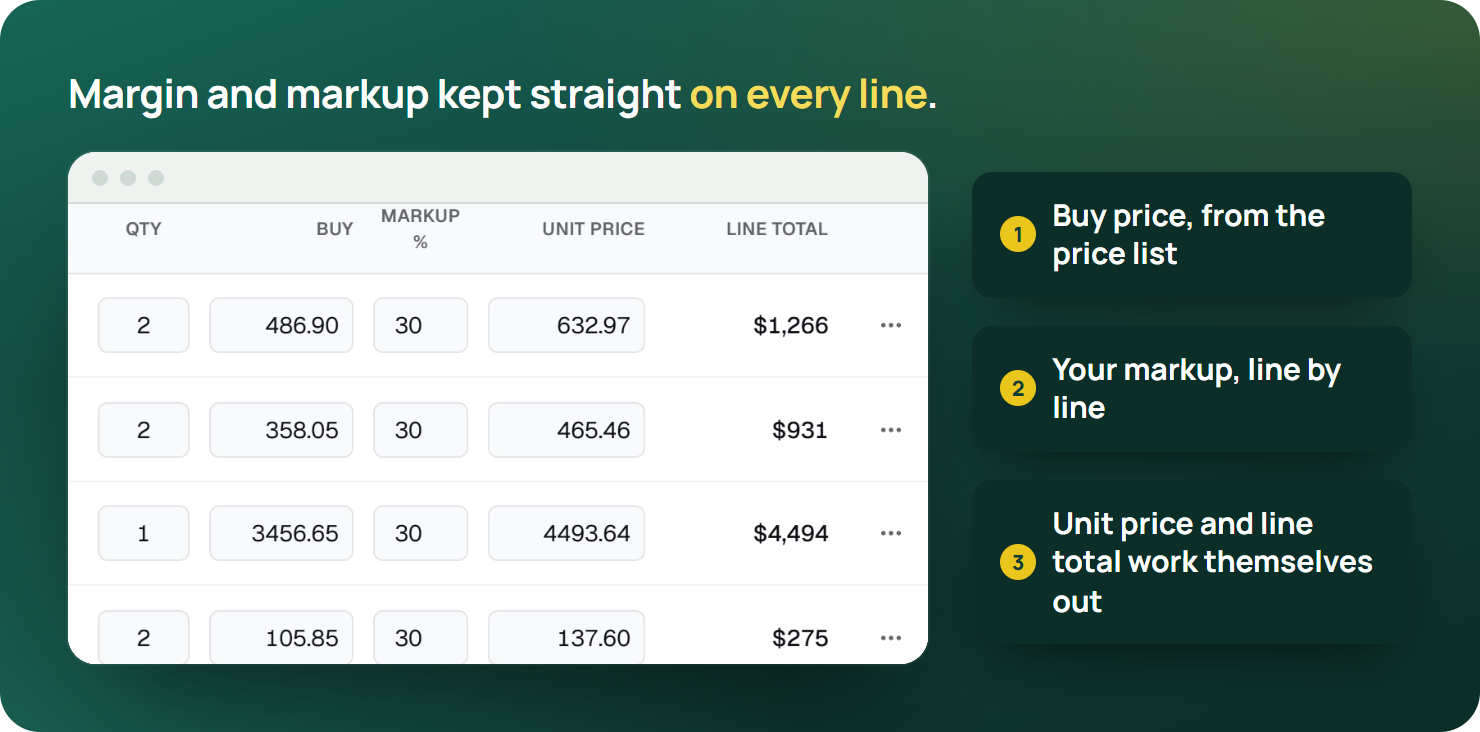
Shaun saves his labour rates once, as proper items: carpenter, apprentice, leading hand, after-hours. His timber and hardware sit in the price list with supplier buy prices and his margin, so the material lines price themselves.6
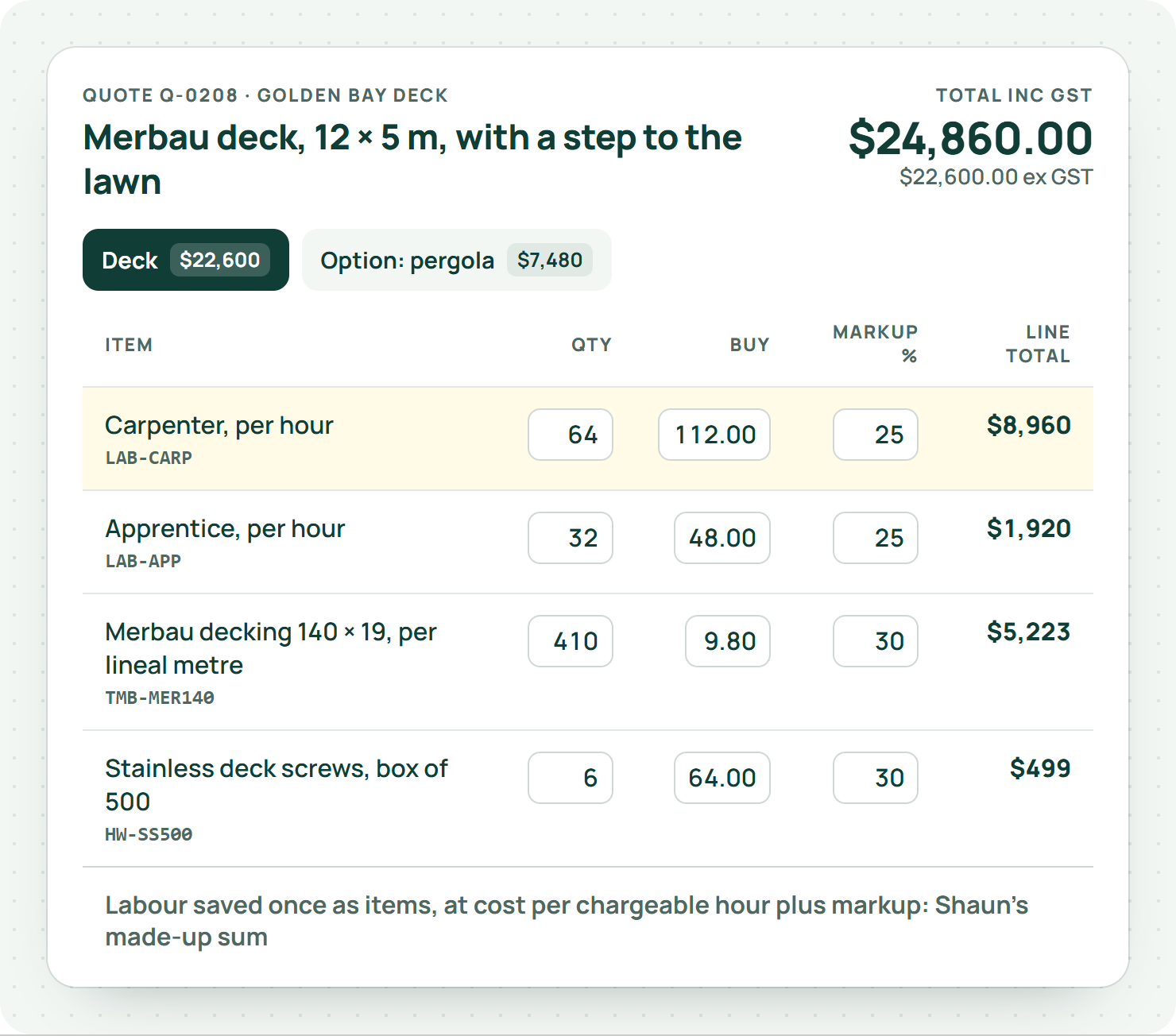
Then he asks the Assistant, typed or spoken from the couch: "Quote the Golden Bay deck, twelve by five in merbau, two carpenters for four days, with the pergola as an option." It finds the customer, uses his saved rates and defaults, asks for anything it can't find, and shows him the quote to check before it goes. Money and customer sends always wait for his OK.7
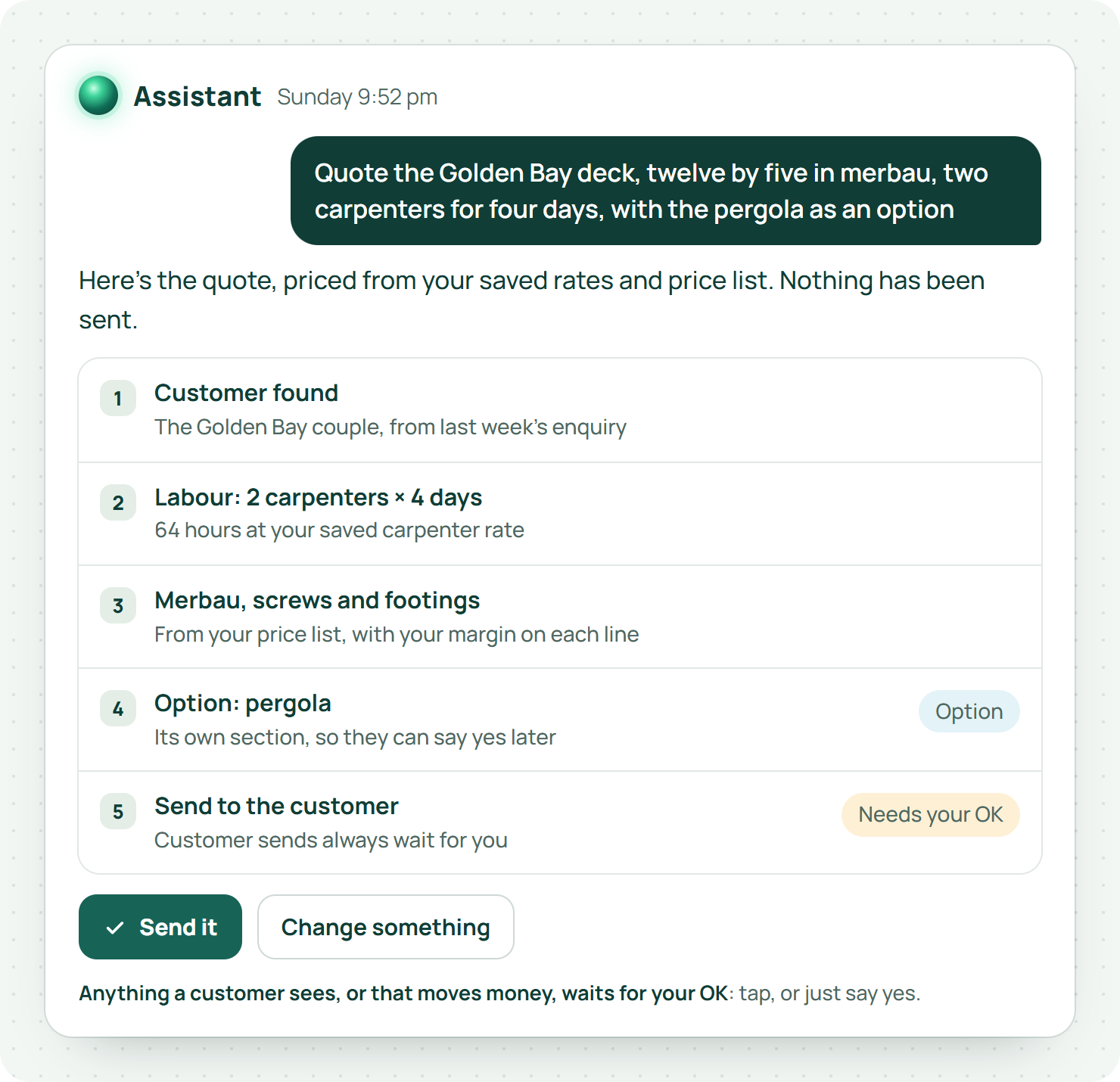
That's why the rate matters. The Assistant uses whatever rate he saved. Get it right once, and every quote after it is right too.7
Step 6 looks after itself, too. On site, the crew start the timer against the job on their phones, so the hours are recorded where the work happened, not reconstructed on Friday from memory.6 On bigger jobs, the labour budget from the won quote sits against the hours actually burned while the job's still running, so Shaun sees the pergola blowing out on day three, not after the invoice has gone.6
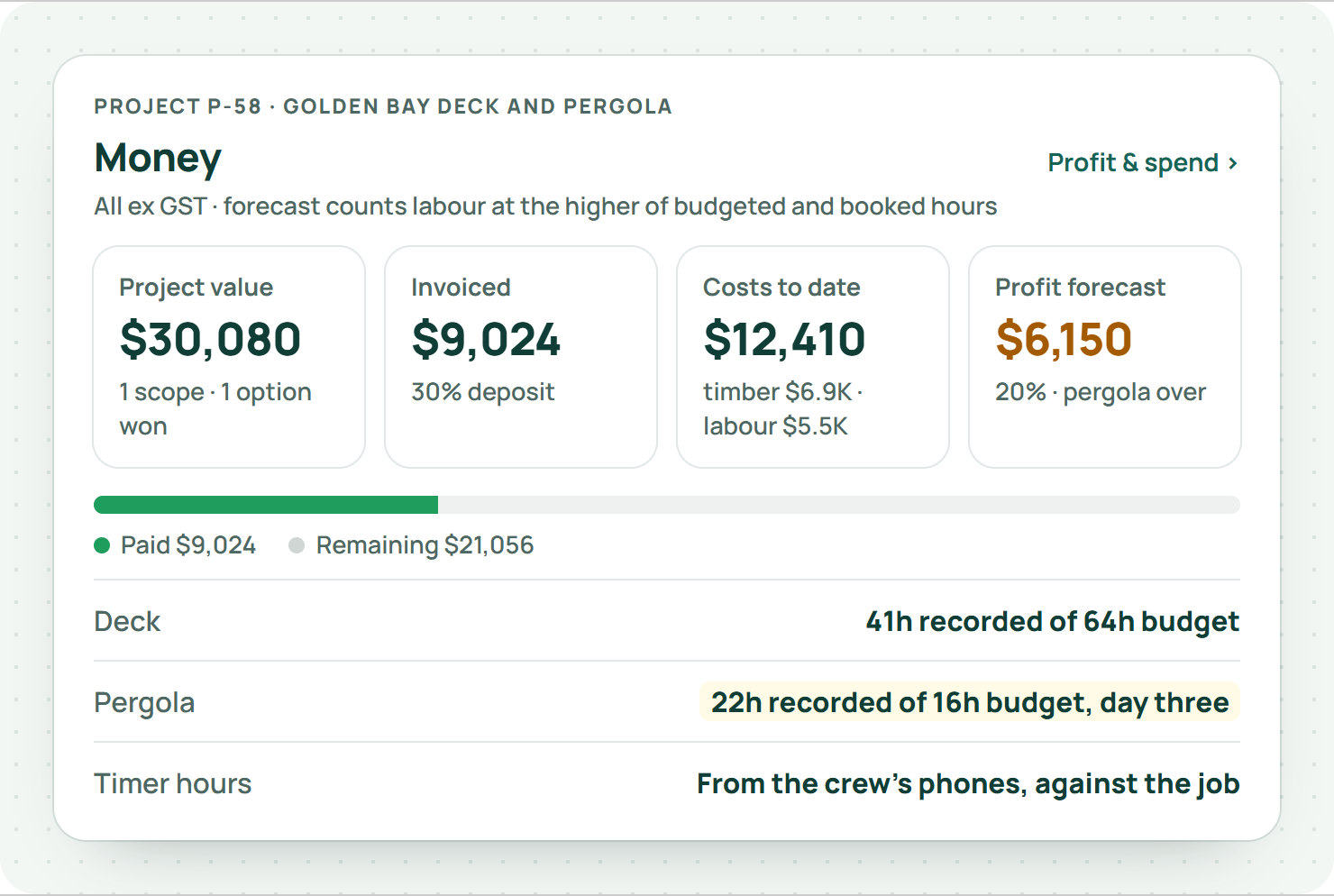
And the job profitability report puts quoted against actual for every job, so his monthly three-job check takes five minutes instead of a Sunday.6 He can ask the Assistant for it, too: "Which jobs last month went over their labour?"7
Our one honest limit: EasyDone works from the rates you save. It won't tell you what your carpenter's award rate is or decide your margin for you. That's still the evening with the cuppa.
Back to Golden Bay
Shaun did his sum on a Tuesday night with the accountant on speaker. His cost per chargeable hour was well north of the rate he'd been charging. Not by a little.
He saved the new rates, then re-ran the Golden Bay deck through the Assistant. The quote went up. He sent it anyway, with the pergola as an option and photos of a merbau deck he built in Port Kennedy last summer.
They said yes. To the pergola, too.
The diary's still full until Christmas. The difference is that now every job in it is paying for the ute.
So where do you start?
Grab last year's profit and loss, last month's timesheets and your current hourly rate. Do steps one to four tonight. If the cost per chargeable hour comes out higher than what you're charging, you've found your problem, and that's the good news, because it's fixable.
If you've had to lift prices lately, our guide to explaining a rate rise helps with that conversation, and our timesheets guide gets the actual hours flowing in.
Then book an EasyDone demo and bring your new rate. We'll quote one of your real jobs with it, on screen, and you'll see what the Golden Bay deck should have cost the first time.